


en
en v
Phone
Cart0 Tickets
Total: 0
Account
Calendar
Search
Menu
X

The Rake’s Progress

VenueTeatro dell´Opera di Roma Teatro Costanzi
CalendarFri 27 Nov 2026 - Sat 05 Dec 2026
Synopsis/Details

Synopsis

Act 1

Hogarth's third painting, showing Tom experiencing a brothel in London

Tom Rakewell is courting Anne Trulove outside her father's house in the country. Father Trulove has doubts about his daughter's proposed marriage and tries to arrange a regular job for Tom; but Tom resists the idea and, left on his own, declares his intention to "live by my wits and trust to my luck." When Tom expresses his wish for money, Nick Shadow appears and tells him that an unknown uncle has left him a substantial fortune. He then invites Tom to employ him as a servant and accompany Tom to London to sort out the inheritance.

The second scene, set in Mother Goose's brothel, shows Shadow introducing his new master to the sleazy aspects of London life. But Tom is uneasy and laments his betrayal of love, yet accepts Mother Goose's invitation to spend the night with her. Meanwhile, back in the country, Anne wonders why she has not heard from Tom. She knows somehow that he is in danger, and sets out for London to aid him.


Act 2

Tom is bored with his dissolute life. He utters his second crucial wish, for happiness, whereupon Nick makes the odd suggestion that he demonstrate his freedom by marrying Baba the Turk, the famous bearded lady. Soon afterwards Anne finds Tom's London house, only to see him emerge from a sedan chair which also contains Baba, whom he has just married. Tom tells Anne to leave, yet genuinely regrets what has happened.

In the next scene Tom is clearly finding his eccentric marriage intolerable, as Baba is a chatterbox with a fiery temper. He silences her by throwing his wig over her face, then falls asleep. Nick enters with a "fantastic Baroque Machine" and demonstrates how, through the use of a hidden compartment in the machine, it appears to turn stones into bread. Tom cries out in his sleep that he wishes it were true, and waking, finds the machine he has dreamt of. Nick hints that if such machines were mass-produced Tom could become a saviour of mankind and Tom sets out to market the machine, not knowing it is a sham.


Act 3 and Epilogue

Tom in Bedlam, comforted only by Sarah Young (Anne in the opera) – the last of Hogarth's paintings.

The plan has failed – the act starts with the auction of the ruined Tom's property by the maniac auctioneer Sellem. The objects for sale include Baba, who has remained immobile since being silenced by the wig. When unwrapped, she resumes her tantrum, now directed at the auction-goers for disturbing her belongings, but calms down when Anne enters. Baba advises her to find Tom and "set him right", and warns her against Nick Shadow. She announces her intent to return to her life on the stage.

In a graveyard, Nick reveals his identity and demands payment from Tom, in the form of his soul; but as midnight strikes, Nick offers him an escape in the form of a game of cards; this section is accompanied only by harpsichord. Tom wins, thanks to the benign influence of Anne. Defeated, Nick sinks into the ground, condemning Tom to insanity as he goes. Consigned to Bedlam, Tom believes he is Adonis. Anne ("Venus") visits him, sings him to sleep, then quietly leaves him. When he realises she has gone, he dies.

In an epilogue, each of the principal characters gives a moral drawn from their scenes in the opera, and then come together to ascribe a final joint moral, "for idle hands, and hearts and minds, the Devil finds a work to do."

Cast

Music by Igor Stravinsky

A tale in three acts

Libretto by Wistan Hugh Auden and Chester Kallman


DIRECTOR: Michael Mariotti

DIRECTION:  Rafael R. Villalobos


Choir Master: Ciro Visco

Scenes: Pablo Chaves Maza

Lights: Felipe Ramos


CHARACTERS AND PERFORMERS

Trulove: Simone Alberghini

Anne, her daughter: Rosalia Cid

Tom Rakewell: Lawrence Brownlee

Nick Shadow: Alex Esposito

Mother Goose: Jennifer Larmore

Baba the Turkish: Daniela Barcellona

Sellem: Ya-Chung Huang


Orchestra and Chorus of the Rome Opera House

New production at the Rome Opera House


In the original language with Italian and English surtitles

Venue
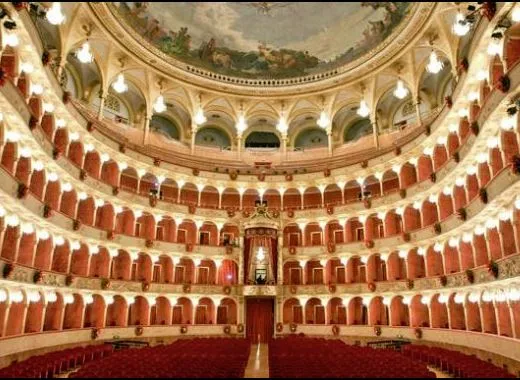
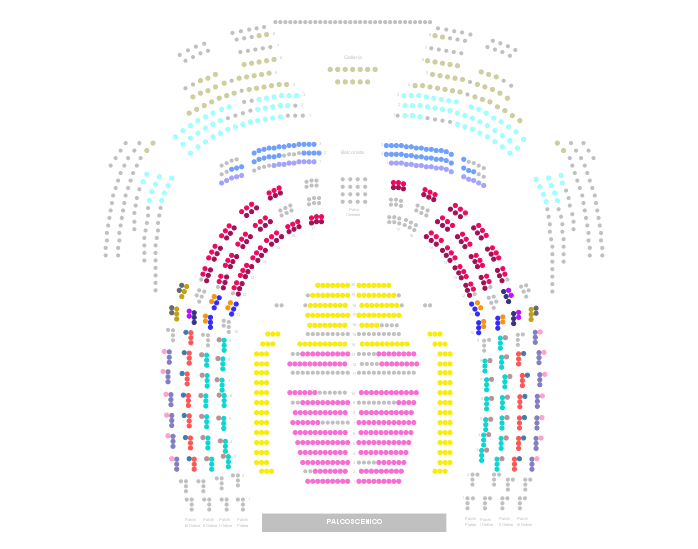
Teatro dell´Opera di Roma Teatro Costanzi

A new way to discover the finest details in different opera houses, theatres one can explore from home in advance through the revolutionary GOOGLE PERFORMING ARTS PROJECT. CLICK ON THE LINK TO SEE THE THEATER.


The Teatro dell'Opera, from its building (1879), at Domenico Costanzi’s request (1810-1898), and 1926, when it was bought by the then Governor of RomE, bore the name of Domenico Costanzi, building contractor and impresario, who committed the building to the Milanese architect Achille Sfondrini (1836-1900), specialized in theatre building and renovation. Built in 18 months on the area prevIously occupied by Heliogabalus’ villa, it was inaugurated on November 27th, 1880 with Semiramide by G. Rossini, conducted by the Maestro Giovanni Rossi, in the presence of the King and Queen of Italy.


Sfrondini’s design privileges the acoustic effect, by conceiving the interior structure as a "resonance chamber": as is particularly evident from the horseshoe shape. At the beginning, the theatre, with a seating capacity of 2,212 spectators, had three tiers of boxes, an amphitheatre, a gallery. All was surmounted by a dome with splendid frescoes by Annibale Brugnoli.


Costanzi invested all his personal assets in the venture. However, due to the despotic refusal of the City Council to redeem the theatre, Costanzi was obliged to manage it himself. Despite the fact that he had to deal with huge financial problems, under his management the opera house held many world premières of such operas as Cavalleria Rusticana (on May 17th, 1890) and L'Amico Fritz(October 31st 1891), both by Pietro Mascagni, who then became very well known.


For a brief period, the theatre was managed by the founder's son, Enrico Costanzi, who contributed to other great premières: Tosca by Giacomo Puccini (January 14th, 1900) and Le Maschere (January 17th, 1901). In 1907, the Teatro Costanzi was managed by the impresario Walter Mocchi (1870-1955) on behalf of the Società Teatrale Internazionale e Nazionale (STIN).


In 1912 Emma Carelli (1877-1928), Mocchi's wife, became the managing director of the new «Impresa Costanzi», named as such following various changes in the company structure. With Rome City Council’s purchase of Costanzi company, the theatre became “Teatro Reale dell'Opera” and a partial rebuilding was commissioned to the architect Marcello Piacentini. Closed on November 15th, 1926, it was re-opened on February 27th, 1928 with the opera Nerone by Arrigo Boito, conducted by the Maestro Gino Marinuzzi.


With the advent of the Republic, the theatre gained the current name of Teatro dell'Opera. In 1958, the building was further remodeled and modernised at the request of the Rome City Council. In over a century, the Teatro dell’Opera has seen its prestige increase internationally. During the several seasons, the most acclaimed voices worldwide followed one another: Enrico Caruso; Beniamino Gigli; Aureliano Pertile; Giacomo Lauri-Volpi; Claudia Muzio; Maria Caniglia; Maria Callas; Renata Tebaldi; Montserrat Caballé; Marilyn Horne; Raina Kabaivanska; Mario Del Monaco; Franco Corelli; Giuseppe Di Stefano; Tito Gobbi; Alfredo Kraus; Ruggero Raimondi; José Carreras; Placido Domingo and Luciano Pavarotti. Among the finest conductors, we can mention Otto Klemperer, Arturo Toscanini, Victor De Sabata, Marinuzzi,Vittorio Gui, Tullio Serafin, Von Karajan, Gianandrea Gavazzeni, Carlo Maria Giulini, Georg Solti, Claudio Abbado, Georges Prêtre, Zubin Mehta, Lorin Maazel, Mstislav Rostropovich, Giuseppe Patanè, Giuseppe Sinopoli, Wolfgang Sawallisch, Nino Sanzogno, Gianluigi Gelmetti and since 2008 the Maestro Riccardo Muti.


How to reach Teatro dell'Opera

Piazza Beniamino Gigli, 7


METRO
Linea A -  REPUBBLICA TEATRO DELL'OPERA stop

BUS
Via Nazionale - H, 40, 60, 64, 70, 71, 170, 116T
Via Depretis - 70, 71
Via Cavour - 16, 75, 84, 150 (festivo), 360, 590, 649, 714
Stazione Termini - 16, 38, 75, 86, 90, 217, 310, 360, 649, 714

TAXI
phone number  - 06.3570

Hotels and Accomodation Nearby

Buy now

Gift vouchers

Gift someone an unforgettable night at the opera.
Choose a gift coupon and let them pick the performance they love—music, drama, and world-class artistry, all in one elegant experience.
Official Tickets for Rome Opera Theater, Italy, Concerts, Museums, etc.
Instagram
Payment
Ticket Search
Google Play
App Store
© 2026 RM EUROPA TICKET GmbH
Whatsapp